
2026-10-06 · Marcus Thorne
Step-by-Step Guide to Clearing a Slow Kitchen Drain
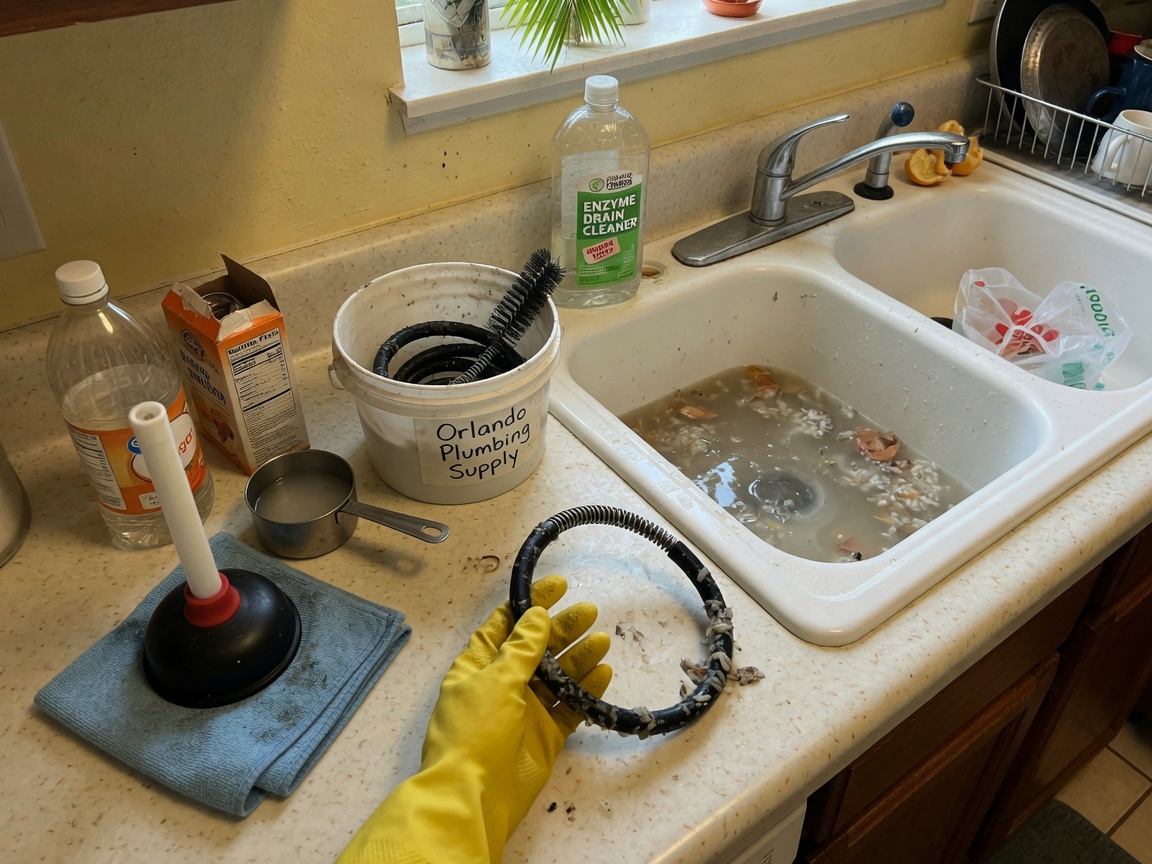
Clearing a slow kitchen drain typically involves a few straightforward steps you can perform yourself, often resolving the issue within 30 minutes to an hour. The most common culprits in Orlando homes, from the historic bungalows in Thornton Park to the newer builds in Baldwin Park, are accumulations of cooking grease, food scraps, and soap residue. While many clogs can be dislodged with basic tools and techniques, persistent or recurring issues, especially those affecting multiple fixtures, signal a deeper problem that warrants professional intervention. Understanding the cause and applying the right method is key to restoring proper drainage and preventing future blockages in your kitchen.
Understanding the Culprits Behind Slow Drains
Kitchen drains are particularly susceptible to clogs due to the type of waste they handle daily. In Orange County, with our love for cooking and entertaining, a significant amount of grease and food particles inevitably makes its way down the sink. When hot grease cools, it solidifies, clinging to pipe walls and gradually narrowing the drain. Over time, this sticky base traps other debris like coffee grounds, vegetable peels, and even small pieces of plastic, creating a stubborn blockage. Add to this the constant flow of soap scum from dishwashing, and you have a recipe for a slow-moving drain. The humid subtropical climate of Orlando can also contribute, as warmer temperatures can sometimes accelerate the breakdown of organic matter, leading to a sludgier, more adhesive clog.
Beyond the common culprits, older homes in areas like College Park or Ivanhoe Village might have cast iron pipes that are more prone to corrosion and rough interior surfaces, which can snag debris more easily than modern PVC piping. Even in newer developments around Winter Park or Kissimmee, improper disposal habits are the primary driver of these issues. Knowing what causes these blockages helps in both clearing them and implementing preventative measures, reducing the frequency of drain problems and avoiding the need for more intensive solutions like hydro jetting.
Step 1: Boiling Water and Dish Soap Flush
Before reaching for harsh chemicals, try this simple and often effective method. First, boil a large pot (about 1–2 gallons) of water. While the water is heating, pour about 1/2 cup of liquid dish soap down the slow-draining kitchen sink. Once the water is boiling, carefully pour it down the drain in 2–3 stages, allowing a few minutes between each pour. The hot water helps to melt and dissolve grease, while the dish soap acts as a lubricant, breaking down the fatty acids and helping to flush the softened clog through the pipes. This method is particularly useful for minor grease clogs that haven't fully hardened.
This initial step is a good first line of defense and is safe for all types of plumbing, unlike some chemical drain cleaners that can damage older pipes or septic systems. If you notice a slight improvement but the drain is still slow, you can repeat this process once or twice. However, if there's no noticeable change after 2–3 attempts, it's time to move on to more aggressive, but still DIY-friendly, techniques. Always exercise caution when handling boiling water to prevent burns.
Step 2: Plunger Power
If boiling water and dish soap don't do the trick, a plunger is your next best friend. Ensure you have a standard cup-style plunger, which works well for sink drains. First, remove any visible debris from the drain opening. Then, fill the sink with enough hot water to cover the plunger's rubber cup, creating a good seal around the drain. If you have a double sink, block the other drain opening tightly with a wet rag to maximize suction. Position the plunger over the drain, ensuring a tight seal, and plunge vigorously 15–20 times.
The rapid up-and-down motion creates pressure and suction, which can dislodge the clog. After plunging, quickly pull the plunger off the drain to break the seal and check if the water drains faster. You might need to repeat this process a few times. The key is to maintain a good seal and apply consistent force. Plunging is a highly effective mechanical method for dislodging many common kitchen clogs, especially those caused by food particles and soap scum. If the water still stands or drains very slowly after several attempts, the blockage is likely more substantial or further down the pipe.
Step 3: Baking Soda and Vinegar Reaction
For a slightly more potent, yet still natural, approach, turn to baking soda and vinegar. This combination creates a chemical reaction that can help break down stubborn clogs. Start by pouring 1 cup of baking soda directly down the drain. Follow this immediately with 1 cup of white vinegar. You'll notice fizzing and bubbling, which is the chemical reaction at work. Quickly cover the drain opening with a stopper or a plate to contain the reaction and force it downwards into the clog.